

PRIN PNRR project funded by the European Union – Next Generation EU, Mission 4, Component 1, CUP I53D23006890001
This project is a cooperation between the Center for Philosophy, Science, and Policy (CPSP) at the Marche Polytechnic University and the Department of Philosophy at the University of Turin.
Run Time: November 30, 2024 – February 28, 2026
PIs: Alexander Gebharter & Lorenzo Rossi
Project Description
This project addresses the pervasive role of uncertainty in scientific inference and decision-making with a focus on the health sciences. Uncertainty arises at multiple stages of research, including data collection, model construction, and interpretation of results. Uncertainty may affect the reliability of scientific conclusions and the effectiveness of health policies in various ways. While numerous methodological approaches exist to handle specific forms of uncertainty, their diversity and fragmentation call for a systematic analysis integrating different kinds of uncertainty, with a specific focus on underexplored ones. The project aims to develop such accounts by combining insights from philosophy of science, formal epistemology, and logic. Its central objective is to improve the reliability of scientific inference and, consequently, the quality of evidence-based health policy. To achieve this, the project pursues three main goals:
(1) to identify and classify different sources of uncertainty in the health sciences;
(2) to develop formal models that make these sources explicit and controllable;
(3) to analyze how uncertainty affects hypothesis confirmation and policy decisions, including how it can be avoided or constructively utilized.
Methodologically, the project integrates conceptual analysis with formal modeling techniques, including Bayesian networks, causal models, and various logical frameworks. This interdisciplinary approach allows for both a deeper theoretical understanding as well as for managing uncertainty in the health sciences.
Overall, the project advances the state of the art on both theoretical and practical levels. It advanced foundational research in epistemology and the philosophy of science, while providing insights and approaches to improve scientific practice and public health policy, potentially enhancing our ability to understand, control, and utilize uncertainty, to reduce epistemic risk, and to support better outcomes in health-related decision-making.
Team
| Matteo Baggio | ||
| NO IMAGE | Contact: Department of Philosophy and Education University of Turin via Sant’Ottavio 20 10124 Turin Italy Email: matteo.baggio@unito.it Webpage: | |
| Andrea Carsetti | ||
| NO IMAGE | Contact: Department of Biomedical Sciences and Public Health Faculty of Medicine and Surgery Marche Polytechnic University Via Tronto 10A 60126 Ancona Italy Email: a.carsetti@staff.univpm.it Webpage: | |
| Vincenzo Crupi | ||
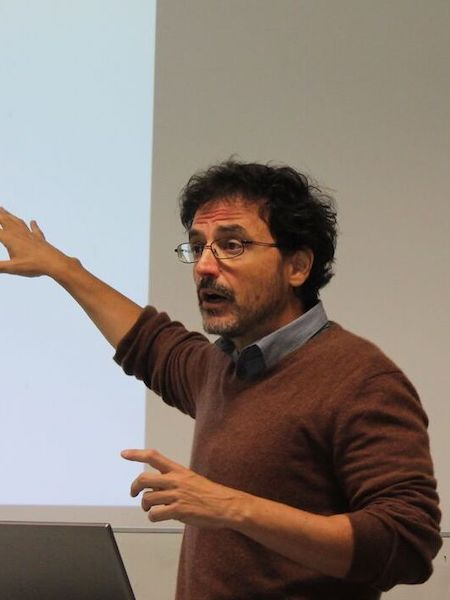 | Contact: Department of Philosophy and Education University of Turin via Sant’Ottavio 20 10124 Turin Italy Email: vincenzo.crupi@unito.it Webpage: www.vincenzocrupi.com | |
| Alexander Gebharter | ||
 | Contact: Department of Biomedical Sciences and Public Health Faculty of Medicine and Surgery Marche Polytechnic University Via Tronto 10A 60126 Ancona Italy Email: a.gebharter@univpm.it Webpage: www.alexandergebharter.com | |
| Andrea Iacona | ||
| NO IMAGE | Contact: Department of Philosophy and Education University of Turin via Sant’Ottavio 20 10124 Turin Italy Email: andrea.iacona@unito.it Webpage: | |
| Barbara Osimani | ||
 | Contact: Department of Biomedical Sciences and Public Health Faculty of Medicine and Surgery Marche Polytechnic University Via Tronto 10A 60126 Ancona Italy Email: b.osimani@univpm.it Webpage: | |
| Lorenzo Rossi | ||
| NO IMAGE | Contact: Department of Philosophy and Education University of Turin via Sant’Ottavio 20 10124 Turin Italy Email: lo.rossi@unito.it Webpage: | |
| Michał Sikorski | ||
 | Contact: Department of Biomedical Sciences and Public Health Faculty of Medicine and Surgery Marche Polytechnic University Via Tronto 10A 60126 Ancona Italy Email: michalpsikorski@gmail.com Webpage: sikorskiphilosophy.wordpress.com | |
Publications
Baggio, M. (2025). Counter-closure principles in the age of complex software systems: A generalized challenge from AI. Social Epistemology. Advance online publication. doi:10.1080/02691728.2025.2588583
Baggio, M. (2025). Knowledge from falsehoods reconsidered. Episteme. Advance online publication. doi:10.1017/epi.2025.10070
Baggio, M. (2025). Logical epistemology, social evidence, and the a priori. Synthese, 205(209), 1–28.
Égré, P., Rossi, L., & Sprenger, J. (2025). Certain and uncertain inference with trivalent conditionals. Australasian Journal of Philosophy, 103(3), 569–596.
Égré, P., Rossi, L., & Sprenger, J. (2025). Trivalent semantics for conditional obligations. In K. van Berkel, A. Ciabattoni, & J. Horty (eds.), Deontic Logic and Normative Systems. 17th International Conference, DEON 2025. College Publications.
Gebharter, A., Feldbacher-Escamilla, C. J., & Sikorski, M. (2026). A causal theory of suppositional reasoning. Philosophical Studies. Advance online publication. doi: 10.1007/s11098-025-02472-z
Gebharter, A., & Leuridan, B. (2024). Modelling cyclic causal structures. In P. M. K. Illari & F. Russo (Eds.), Routledge handbook of causality and causal methods (pp. 269–280). Routledge.
Gebharter, A., & Osimani, B. (2026). The formal structure(s) of analogical inference. Erkenntnis, 91, 923–953.
Rossi, L., & Bruni, R. (2024). Is truth a vague concept? Rivista di Filosofia, (3), 409–428.
Rossi, L., & Bruni, R. (2023). Truth meets vagueness: Unifying the semantic and the soritical paradoxes. Journal of Philosophical Logic, 52, 1637–1671.
Rossi, L., & Iacona, A. (2024). Naïve truth and the evidential conditional. Journal of Philosophical Logic, 53, 559–584.
Sikorski, M. (2024). Values, bias and replicability. Synthese, 203, 164.
Sikorski, M., & Gebharter, A. (2025). The criminalist’s paradox as a counterexample to the principle of total evidence. British Journal for the Philosophy of Science. Advance online publication. doi:10.1086/735282
Sikorski, M., Gebharter, A., & Osimani, B. (2025). Redefining representativeness of a sample in causal terms. Journal of Evaluation in Clinical Practice, 31(4), e70137.
Sikorski, M., & Liu, D. (2025). Non-epistemic values and the automation of science. Journal for General Philosophy of Science. Advance online publication. doi: 10.1007/s10838-025-09736-6
Events
Osimani, B. & Gebharter, A. (Organizers). (2024, December). Evidence, bias, and uncertainty in the sciences. Workshop conducted at the Center for Philosophy, Science, and Policy at the Marche Polytechnic University, Ancona, Italy.
Osimani, B., & Gebharter, A. (Organizers). (2023, December). Probabilistic reasoning in the health sciences. Workshop conducted at the Hotel Quirinale, Rome, Italy.
Rossi, L. (Organizer). (2024, June). Substructural and non-classical logics. Workshop conducted at the University of Turin, Italy.
Rossi, L. (Organizer). (2023, November). Vagueness, truth, and semantic indeterminacy. Workshop conducted at the University of Turin, Italy.
Sikorski, M., Gebharter, A., & Osimani, B. (Organizers). (2024, September). Causality: Ontology, epistemology, and the scientific method. Affiliated workshop conducted at the Salzburg Conference for Young Analytic Philosophy 2024 (SOPhiA 2024), Salzburg, Austria.
Sikorski, M., Gebharter, A., & Osimani, B. (Organizers). (2024, August). Probabilistic Reasoning in the Sciences. Conference conducted at the Marche Polytechnic University, Italy.
Zhang, Z., & Gebharter, A. (Organizers). (2025, September). Causal inference in science: Metaphysics and methodology. Affiliated workshop conducted at the Salzburg Conference for Young Analytic Philosophy 2025 (SOPhiA 2025), Salzburg, Austria.